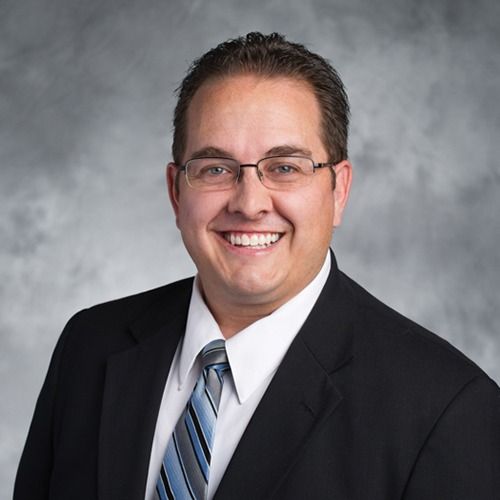
Sheriff Chris Swanson: A New Paradigm in Governance
The episode delves into the increasingly prominent role of law enforcement officials in electoral politics, particularly as they position themselves as champions of reform and public safety. We engage with Chris Swanson, the elected sheriff of Genesee County and an aspiring Democratic gubernatorial candidate, who garnered national attention for his empathetic leadership during the 2020 protests against police violence. Our discourse transcends mere moments of solidarity, probing instead into the systemic changes necessary for genuine reform within law enforcement. We interrogate critical questions surrounding the expansion of executive power by law enforcement leaders, the essential nature of accountability, and the potential for transformative policies that prioritize rehabilitation over punishment. Through this dialogue, we aim to illuminate the intricate balance between authority and responsibility in the pursuit of a more equitable democratic process. A prevailing trend across the nation involves law enforcement leaders increasingly stepping into the realm of electoral politics. These officials, once solely perceived as guardians of public safety, are now presenting themselves as reformers and executives, aspiring to govern entire states. In Michigan, this dialogue has profound implications, as the governor's office wields significant authority over critical areas such as emergency powers, policing, and civil liberties. Our esteemed guest today is Sheriff Chris Swanson of Genesee County, a Democrat and gubernatorial candidate, who gained national recognition during the 2020 protests for his unusual yet impactful gestures of solidarity amidst widespread discontent with policing. This discussion transcends isolated incidents; it delves deeply into the systemic changes required when law enforcement leaders seek expanded executive power. We probe essential questions: What does genuine reform entail, and what sacrifices must be made to ensure that accountability is preserved, not just during one’s leadership but for future administrations as well?
Takeaways:
- The involvement of law enforcement in electoral politics is a growing trend across the nation.
- Sheriff Chris Swanson emphasizes the importance of accountability within law enforcement leadership.
- The conversation focuses on the systems of power and reform rather than isolated incidents.
- Real change in policing requires a cultural shift, not just policy changes.
- Community engagement is essential for effective policing and building trust with the public.
- Sheriff Swanson's transformative initiatives in Genesee County serve as a model for other jurisdictions.
Links referenced in this episode:
Companies mentioned in this episode:
- Genesee County
- Michigan
- Minneapolis
- Harvard University
- Brown University
- Stanford University
- San Diego State University
- Jelly Roll
Transcript
Across the country, we're seeing a familiar trend.
Law enforcement officials stepping into electoral politics, presenting themselves not just as public safety leaders, but as reformers, healers, and executives ready to run entire states. In Michigan, that conversation has real weight. The governor's office isn't symbolic.
It holds extraordinary power over emergency authority, policing, incarceration, labor rights, environmental enforcement, and civil liberties. Today's guest is Chris Swanson, the elected sheriff of Genesee county and a Democrat and a Democratic candidate for governor.
national attention during the:We want to understand what it means when law enforcement leaders seek expanded executive power. Where does reform come from? What power are you willing to give up?
And how to ensure accountability survives, not just your leadership, but the next one. Sheriff Swanson, thank you for joining us.
Chris Swanson:Thank you, my brother. Great introduction. Taylor, thank you.
Taylor Darcy:Thank you for your. Thank you for coming on.
Taylor Darcy:I appreciate it.
Taylor Darcy:So I wanted to, you know, you reached out to me, and we wanted to come on, and I think being a sheriff in Democratic politics is a unique proposition. What convinced you that your skills used to run a sheriff's department translated to governing an entire state?
Chris Swanson:Yeah, it's unique, which makes me a different Democrat. You know, In Michigan, there's 83 counties, and Genesee is the fifth largest county. We're a big county. I've had two elections.
And the role of a sheriff is to enforce laws and maintain order. The role of a governor under the Constitution is the same thing, to enforce laws and maintain order with a heart for the people.
So it's an easy transition.
And the heart of leadership at that executive level, you know, you mentioned this in your introduction, is, you know, power, but it's mainly influence. Those positions of influence can have great impact on people that are looking for some change in somebody to be their voice for the voiceless.
That's why.
Taylor Darcy:Right. Well, and I think it's a, you know, a shift in mindset, because now you're.
You're talking about, you know, as opposed to boots on the ground, how can we strategically help our people? And I think it's important that we.
We look at, you know, the big picture when it comes the types of issues that we face, because you have an enforcement role currently, but what about a prevention role? How do we deal with recidivism from a policy perspective, not from an enforcement perspective?
And I think that bringing that different Perspective to the discussion is an important part of that.
I know that I have a friend who is the deputy sheriff, and we talk regularly, and he talks about some of the things he's here in California with me, and he talks about some of the things that he faces as a patrol officer, as a deputy sheriff and whatnot. And it's very different than the policies that you're going to be making as governor. So I guess, what would it be to you?
What would it mean to you as far as, like, why did you choose to run differently than other candidates?
Chris Swanson:Well, I think if you look at my background and for all your listeners and viewers, you know, you want something that is unique and authentic, but also has a history of stepping into the gap. So take the profession that I'm involved with for 33 years out and know my heart.
,:And it brought hope to people. I couldn't bring George Floyd back from the dead. I couldn't heal race relations.
But I think a position of law enforcement with a heart is really what can transform people's mindsets and to fix the system. So I'm not interested in just a program. I'm interested in culture changes.
And that was one of many 40 protests throughout the summer that year in Genesee County. Nobody got arrested, nobody got injured, no businesses burned.
It was a moment that I say people got to see around the world what I've been my whole life. That's what leadership can do, and that's the power of influence.
Taylor Darcy:And I think it's important that people. That's one of the reasons why I started this, this podcast was to. To.
As an attorney, as a person of whiteness, you know, we have a unique position, right? We have, you know, white privilege is a thing, whether you want to believe it or not.
And I don't mean that from a. I have to apologize for being white, but I do have to acknowledge that my whiteness has not hurt me in. In pursuit. And I think standing up for what's right, even when it's inconvenient, is an important part of that right.
Because, you know, there's so many people right now that are sitting back and letting certain, you know, like race be a determinative factor of whether or not someone should be a citize.
And I think that that's a real issue because we're facing a constitutional crisis almost every day now with, with Donald Trump and his, you know, attempted annexation of Venezuela. He wants to annex Greenland.
And these are issues that, you know, he, they talked about putting boots on the ground in Venezuela and like, are we really going to send our sons and daughters to Venezuela to potentially fight for oil? As he's repeated. And so, you know, you've been praised for symbolic moments of solidarity. What, what policies do you see that come out of that, from.
From solidarity in the moment to how can we enact that real change that we need to, to further our society and build our perfect union?
Chris Swanson:Well, that's the reason I'm wearing this shirt of let's Walk because it is a reminder to me that when you ask people closest to the problem, they'll tell you the solution.
And on that moment that you talked about, that birthed an incredible movement called Ignite, where we transformed how we do jails from incarceration to education. And that whole summer, being asked by media, what's next, Sheriff, what's next? I said, we're going to educate people that are incarcerated.
,:And when they leave jail, they have a house, they have their id, they have a job, they have education. And you know what that happens, Taylor?
You reduce crime, you reduce homelessness, and you reduce, you know, the demand of addictions and mental illnesses. These are the things that truly transform lives.
And those moments have now been just not only duplicated around the country, but have been emulated by sheriffs from all walks of life. Fifteen states, 40 sheriff's offices, we have graduated thousands of people across the country. That's how you break the systems.
That's how you bring some unity out of division. I'm feeling it like you. Every single day I wake up and there's uncertainty. So what can we do with our positions to show long lasting impact?
e water crisis like we did in:We can stop riots from happening and make Them peaceful protest and transform the way people are seen and heard.
el that's been going on since:So at the state level, I can't control what's happening in Venezuela. I can't control what's happening in Greenland. But what I can control is what we're doing here. That can bring hope.
You can only control your controllables, and that's what we're doing. And the inspiration of this campaign is there's more coming. If I'm able to do this in Genesee county, imagine what I can do statewide.
Taylor Darcy:Sure, sure. Actually, I taught in prison. I taught business law in San Diego.
Here they have a restorative justice program similar to what you're talking about, where the inmates that complete their aa, for every class that they complete, they get.
Taylor Darcy:Six weeks off their sentence.
Taylor Darcy:And if they complete their aa, they.
Taylor Darcy:Get six months off their sentence, and.
Taylor Darcy:They'Re also guaranteed admission to San Diego State University. It was a fantastic program. I got to go into the jail and teach the inmates business law.
And the program administrator told me a story, and he said, one of the people that you're going to be teaching was faced with a decision that you and I will never be faced with. And he said that he was. Someone put a gun to his head and said, kill him or I kill you.
And while I don't condone, obviously, murder, that isn't the point. Putting yourself in that position and saying, we don't have all the answers. We aren't in a position to make those decisions.
Does it make it right that what he did was. No, that doesn't make it right. It's not acceptable behavior.
But you and I won't be faced with that type of choice where it's someone else's life or ours. And more likely than not, he would have killed them both.
And then you have to ask, okay, well, at least jail life, I have a chance at a life versus dead, I have no chance. Right. Like, that type of understanding has to be at least at a basis of a policy decision. Right. It can't be ignored.
Because if the war on drugs and the war on crime was going to work, it would have worked. Like, we have spent billions and trillions of dollars fighting this war, and we're no better off than we were when we started, really.
In fact, in some ways, worse. And so why do we. What's the definition of insanity? Doing the same thing over and over again and expecting a different result.
And I think about that all the time because we have to make decisions that are going to change lives for the better.
Chris Swanson:I gotta tell you, that's what Ignite does. And I'm telling you, we've reduced crime by 23%. We've reduced jail violence by 97%. We've restored people's lives.
We've reduced the jail population by 100 inmates over the last two years. And every month that an inmate is in Ignite, it saves the community $7,200 per year on social justice costs. So when you talk about the.
Those moments, like you said, that we will not face, you're right.
There's people that have been dealt an awful hand of cards, and everybody who's listening and hearing, myself included, have been given a second chance.
And I'm not writing letters to judges or I'm not advocating for their cases, but if nine out of 10 people in jails in America go back to the street and only 10% go to prison, how are we going to return your neighbor? I have an idea. Let's educate them, give them a pathway to succeed. They don't break the law, they don't reoffend. They have a home, and everybody wins.
Taylor Darcy:Right?
Chris Swanson:Ignite is the answer. And that's what we're going to do statewide, just like we've done nationwide.
Taylor Darcy:That's very important because you're looking at the human rather than the case. Right? That's the important part of this, is that we don't have to excuse crime. We can condemn crime.
While we equally acknowledge that there are circumstances that cause it, that are beyond the simple, oh, they're a bad person. Right? That's so oversimplification of the issue. When poverty is one of the biggest issues that, that crime.
You know, nobody knocks up a convenience store because they're rich, right? You know, nobody steals because they have.
I mean, we can get into white collar crime a different day, but, you know, nobody goes into a 711 and tries to hold it up for the sake of. Of getting food or money because they have plenty to work with. Right?
And so these programs like SNAP and, you know, and these different types of federal programs as well as statewide programs are keys to reducing recidivism.
You know, I don't know if I'm sure you've seen it, but the Shawshank Redemption, you know that, you know, he wasn't a criminal when he went into court, went into prison, but he came out a criminal. Right. And that's something that we have to discuss is how can we take citizens that have been dealt a bad hand that can make.
That we can help them make better choices, and that we can return them to their community better than what they left. Right.
Chris Swanson:That's right.
Taylor Darcy:Because that is where we restore the hope and faith of others in our justice system, which has significant flaws. Right. I mean, just call a duck a duck. That doesn't mean it's terrible and we should throw the baby out with bathwater.
But there's certainly a lot of opportunity for reform.
Can you tell me about a time that you've enacted a reform that wasn't necessarily the most popular with the police unions or the sheriff's associations?
Chris Swanson:Well, I can tell you, when I walked with the people, we had a whole line of police officers with shields, batons, and helmets.
And as the sheriff of the county, when we were outnumbered 50 to one and there was going to be bloodshed, you know, I didn't take a poll of what the right thing to do was as the sheriff. I broke the line, took my helmet off, and I hugged a guy, name is Jeff Hawkins.
And one of the organizers came over and I just said, hey, there's a better way. I said, you tell us what we need to do. They said, you know, you gotta tell us what you just said to me. And I said, well, get their attention.
And I got them all around. And I just said, listen, you want to turn this into a parade, not a protest? And, you know, that guy in Minneapolis isn't who we are.
I said, these guys are here to help you. And when I said, what do you need us to do? And they started chanting from the belly of pain, walk with us.
It took me three seconds to say, that's the better option. Let's walk. That was not popular, Taylor. It was not popular in law enforcement, but the country and the world saw it.
That's who I care about, is the people. I'm not looking for a popularity contest in my own profession.
I know I am a disruptor, but I also know that my history has shown that I will always have a fist of iron and a hand of velvet.
Taylor Darcy:It.
Chris Swanson:The second thing is educating people in jails.
y like me, I realized back in:So when we launched Ignite, can I tell you, you know, I have to look direct to camera every time we do a graduation, which on the 13th of January, we're going to have our 39th commencement. And, you know, that's why Jelly Roll has come to the jail. We've caught the attention of different people around the world.
I can tell you I look direct to camera and say, it may not be a big deal until it's your kid.
Taylor Darcy:Right?
Chris Swanson:That's when it becomes real. Because 80 million people in America have done at least one day incarcerated. And you just mentioned it before.
When you listen about people's perspective, that changes everything. I want to hear about people's perspective. I have a gun to my head saying, kill them or you.
But other people have, like you just mentioned, we've got to be sensitive to that and be aware. That's happening every day.
Taylor Darcy:You know, Jack Welch, who is famous for his turnaround of I believe it was General Electric, My brain, I just heard it and then now it's popping out.
But one of the things that he would do is he would go to the front line of the manufacturing and talk with the workers on the front line, front line about what could be improved. And I can say that from personal experience.
When I was in corporate America with different industries, there are very few CEOs, very few leaders that would actually do that. And I bring that up as an opportunity to say, we have an opportunity to change things, but we can't change it if we don't know what's wrong.
What's the AA model? First admit there's a problem. Well, you can't admit that there's a problem if you don't know that there's a problem. Right. Like if.
If you're sitting in an ivory tower up in. And I'm not saying you. I'm just saying in general. I'm saying if.
Chris Swanson:I get it, you're speaking it.
Taylor Darcy:Yeah. If you're sitting in an ivory tower, how can you expect to know that?
You know, hey, maybe if we take the tweak this one thing, we might be able to make this difference and we might be able to change people's lives for the better without costing a dollar. That's the beautiful thing is so much, so much change doesn't need to cost money.
When we look at it, at how we can change it or we can have a net positive snap, for instance, from what I've read, for every dollar that exists there, it's like $1.80. The economy benefits by $1.80. It's not a net negative, it's a net positive.
And so keeping people out of poverty, who would have guessed would have been the easy answer to it. And yet we have that controversial perspective that we should help the poor, which we'll get into.
We don't have to get into the whole Christianity, you know, nation thing that is there.
Chris Swanson:Yeah, least of these that take care of your neighbor.
Taylor Darcy:Right, exactly. And yet we have people that are saying no, we're too worried about the fraud which is almost non existent in snap.
I'm not saying it doesn't exist, but it's very minimal. Wic, same thing. You know, my wife and I, we have six kids, we've had, we've used wic and there have been, it's been a lifesaver for us some months.
Right. Because that's just, just how it is.
Chris Swanson:Listen, every organization, every program has somebody does something stupid.
Taylor Darcy:Right.
Chris Swanson:That doesn't mean that the whole organization or the whole, or the whole profession, you know, I mean the whole thing about the George Floyd is that's not who we are.
Taylor Darcy:Right.
Chris Swanson:We don't defend the things that are, that are being done. Right. You accept that identity and that's not affair.
Taylor Darcy:Right.
Well and I think that's so important that you're accepting that it doesn't have to be that way because there's so many that it becomes an us versus them mentality. Right. Like it, oh well, we're the police, we have to enforce the laws. Well yes, of course you have to enforce the laws.
Truth be told, I was in the background process for to become a police officer at one point in my life and you know, they asked the hypothetical question, if you pulled over your someone who is also a police officer of first beating, would you give them a ticket? And there's the blue code that goes with that. But then there's also. He knows better. Right. Like he should be following the law, not breaking the law.
And I firmly believe that. I moved on mainly because I had answered the question correctly.
I think correctly that yes, I would give him a ticket because I think that if you're sworn to uphold the law that you have a higher standard, not a lower standard. Right. You don't get out of it just because you're a police officer. And, and making bad. Making bad choices now. And that's such a.
You would think that would be an easy question.
But I can guarantee you that there were people that were going, well, he is my brother in blue, you know, or he is my brother in brown, whatever, you know, whichever color you're wearing, he is a brother in the badge. And to justify it easily and say, yeah, I wouldn't give him a ticket or I'd give him a warning or whatever.
But the problem is then that gives license for further bad behavior. Right? Like, George Floyd didn't start out with a knee on his neck. Right. Derek Chauvin didn't start out being. He might have been a racist.
I'm not saying he is or isn't. I don't know what's in the man's heart. I can tell you, though, that he didn't start out with his knee on his neck. You don't.
As a police officer, I've.
I've talked with my friends that are police officers, and you start out from the academy wanting to take on the world and be the absolute best and be that person. You don't start out with the idea that putting your knee on a person's neck is a acceptable thing. And I think that.
And that starts with, are we holding law enforcement accountable when they make those types of choices? I'm not talking excessive. You can't arrest someone because you're worried about the consequences of being. Know that type of thing.
I'm talking about the obviously blatant. I mean, he was found by a court of, you know, court of law to have been. To have affected George Floyd's life.
But, you know, it starts with inches, not miles. Right. It's very rare that we have that. So I guess, you know, my next question would come to what is your perspective? Oh, go ahead, go ahead.
Chris Swanson: in full uniform in:And they said, you know, they want unity, hope and law and order. And I said, I want to do it in full uniform. So that's the third thing I wanted to touch on.
That really created a divide among my profession, but I'd do it Today, I'd do it tomorrow because I believe in that message of protect, serve and unify.
Taylor Darcy:Well, and to be frank, you know, conservative, most police are conservative, most police are Republican that I'm aware of. And I'm not saying that's, you know, general. That everyone is. But you are definitely in an outlier category.
And, and I think, I think we need more of that. We need to, to embrace the fact that, that you can, you, you don't have to accept every tenant of a party to be a member of the party.
Right, right, right. You know, you don't have to say that I, I support it 100% when you only supported 80%. And there's issues with it.
Chris Swanson:Right.
Taylor Darcy:And we can agree that that's okay because we're, we're citizens to believe how we want to believe. What is your, you know, what is your perspective on, you know, we saw with, with President Trump and his deployment of force from Texas to Illinois.
Sorry, I was going to make sure I got my northern state, my, my southern state. Correct. What is your perspective on, on deploying state force against protesters?
Chris Swanson:No, I mean, protest is what built this country. And if it's a peaceful protest, you give people space to be heard. When people become violent, that's a riot. That's a completely different response.
And to use the United States military into big cities in order to enforce laws, I mean, there's no place in that unless the governor requests it and the governors don't. And I see it as, it's used as a weapon, not as a tool. You know, National Guards and states are used for humanitarian issues.
Detroit police officer in the:And law enforcement and military, which you just mentioned on Venezuela, is that is two different types of philosophies. And when you have local law enforcement, county, statewide, and federal doing their jobs, they do it well, and that's the way it should be.
But, you know, bringing National Guard into cities, especially from other states, there's no place for that.
Taylor Darcy:Yeah, and I agree.
I think, I think that there's, you know, they, they brought in the National Guard for Los Angeles, even though there was no rioting or anything of that nature. There may have been some minor stuff. And it really, I mean, there are two, there were two soldiers that were killed in D.C. because they were there.
And unfortunately, we've moved on from that discussion, and I Wanted to go back to it just briefly, because this idea that the show of force, especially since there was no real danger there, creating people standing around for no apparent reason, if there was civil unrest, if there was rioting, if there was those types of things, then by all means deploy the force. But two people lost their lives because you. He chose to have them there despite no real need for them to be there in an. In a policing fashion. Right.
Soldiering is very different than policing. And I think that we need to make sure that we acknowledge that, you know, that we can. That we need to make sure there's that clear delineation.
It's, you know, it's being fought in the courts, thankfully. But, you know, we still have two people dead unnecessarily because of one man's ego.
So I wanted to talk about one of the questions that I wanted to bring out. Would you support removing qualified immunity at the state level?
Chris Swanson:So I love what I do, and I know that if we do something that is challenged in court and a professional level, then unfortunately that has to be addressed in the courts.
But officers that go above and beyond and take that badge and they go and they make their own personal decisions, that's where that, in my opinion, that protection is very, very limited.
That's why the courts can assign punitive damages to police officers that go above and beyond what they would do, whether it's a case of bad shooting or something else. But, you know, law enforcement is a unique profession and police officers need to make the right decisions. Not every decision is an easy one.
They're split second. So there has to be a balance of protection. If you're doing your job and you make a mistake of the head, that's different than a mistake of the heart.
So I think there's a balance between that. Being a police officer these days is a tough job. And listen, we do it to ourselves a lot of times.
e much better than we have in: s or the:We're talking about people's rights, their Constitutional rights, and we better get it right. But the profession is hard, but I think it's moving in the right direction. And law enforcement has to be protected.
But you can't go outside your protection, right?
Taylor Darcy:I guess, you know, there's a change. I wonder.
This is a hypothetical wonder, so I'm not necessarily expecting a response, but you can enact policies and procedures, changes, but people didn't see it as a challenge to get around the rules, right? Like unfortunately. And even in law enforcement, you're sworn to uphold the rule, the law, but people make their own choices, unfortunately.
I guess my question is how do we change people's hearts, right? Because I think that that's where the key is.
Because if we can change the Derek Chauvin's hearts of the world, then we don't have George Floyd's of the world being killed unnecessarily. And I think that's a, you know, I'm not saying that that's an easy answer. There's no, you know, how do you change a person's heart?
You know, like, you know, I was raised a conservative, I'll be honest with you. And it took, you know, years of education.
My bachelor's is in criminology and justice studies, so theories of crime, not criminal justice, where I was enforcing. And it really changed my heart.
It really helped me to understand from a sociological perspective the effects of crime and the effect of poverty and so on and so forth.
And that showed me that I was wrong, that I was wrong as that the government could be a tool for good, that government could be a tool for the upper, you know, for the betterment of society. Not as a crutch or as a bad thing. Right.
And I think that for you, if we can, you know, have, if we can work towards changing those hearts, and I think that comes from the dei, you know, unfortunately, that became a four letter word over the last several years.
But I think that that's the answer, you know, that the answer to changing hearts is helping others to see the racism, call out the racism, call out the bad, and actively work towards showing the truth and the proof that that is what policies do you see yourself enacting that will help change hearts. And knowing that that's a hard thing to do. I understand that.
Chris Swanson:Yeah. Well, I tell you from the official side, and then the heart side number one is if you can't train it out, discipline it out, you need to fire it out.
You cannot have police officers that have not demonstrated the proper heart and mind to be a police officer. And don't keep kicking the can down the road.
Since I've been sheriff, I've told you, I've been in the business since 93, but I've been sheriff for six years. Just my term as sheriff, I fired over 30 police officers from my own agency because they don't fit. They're just not a good fit.
And we're not going to keep it going. And I've never lost an arbitration because of one of those. And I still have to deal with the police unions.
Even when we want to be a profession that is seen as a positive and a objective profession. I still get pushback on disciplining police officers, but it's the right thing to do.
Now, I've also helped a lot of police officers do the right thing.
So on the official side, you've got to have a fist of iron when it comes with, you know, being a leader of an executive team that has the power to stop somebody in their tracks and take away their freedom, or a sliding scale of what we call a force continuum.
But on the flip side, I went beyond that because I wanted the people on my end and the people in the community to see what's behind the badge and what's behind those lives more than just answering 911 calls. And you brought it up before about the word perspective. I'm not interested in people's perception. I'm interested in knowing people's perspective.
Like you tell me, I didn't know that you grew up the way you did. I didn't know you had six kids. But, boy, you've got a different perspective. And we just met each other 33 minutes ago.
When you teach people to go beyond the what I call the one dimension, you start to see people's real lives.
,:I'm going to get my partners from around the community to put in all the things that people need.
And then we're going to take the police officers with community members that are not from that community, and we're going to deliver them to other communities that don't look like them, and we're going to knock on the door and we're going to give them a box and we're going to say You've been chosen because either you lost somebody, you do a great job, whatever it is, whatever you don't need, you get to go give it to somebody else. It's a positive interaction. And I'm telling you, we just finished last December, our sixth annual Holiday Spectacular.
It's now been duplicated in over 25 counties last December. And if you go right now and look at the second Saturday of December, from here on out, it's the National Day of Unity.
That's the answer to your question, is putting people with different perspectives that don't always see it and see the human side of it. But it's got to start with leadership.
And to your question, when we first started, why is this a transition that makes sense from sheriff to governor?
Because I've seen what we've been able to do in a very harsh environment, Flint, Michigan, of all places, and yet we've been able to speak around the world during a protest that reached 3 billion people. We've been able to change the culture of jail through Ignite.
We've been able to launch ghost, which is targeted and found people that are predators against the vulnerable through human trafficking. I've been able to speak in Oxford University just last year to 82 countries on literacy because we've changed the way we've done jail.
That's how you change it, Taylor. It's got to start with leadership. It's one after the other after the other.
Taylor Darcy:And I think that that's, you know, such a valid point that you change leadership. You know, change begins with leadership. Right?
Like, that's, you know, what we're seeing an abject failure of in a lot of what's going on in Washington.
And I guess, as governor, how will you, you know, like, I see a lot of, there's a few governors that are pushing back against, you know, policies that are trying to be enacted on the states. How will you push back against Trump's policies to try to force the states to do things they shouldn't do?
Chris Swanson:Well, without a doubt, every state in the country has to have a relationship with the federal government, whether it's Medicaid, Medicare, education. If they want to destroy the Department of Education, then give the states the money and we'll do our own Department of Education.
Don't hold us hostage. So a governor has to do one of two things, has to know when to work for and with the national government in order to benefit the people of the state.
And our governor, Gretchen Whitmer, a dear friend, did the same thing and did the right Thing during the Selfridge Air Force Base, when she worked with the federal government to get a whole new fighter pilot plan and a whole new refueling center at the Selfridge Air Force Base. Did that for Michigan and for national security. That's the right thing to do.
But on the flip side, you better push back when the people of Michigan are getting jammed up, whether it's SNAP or Medicaid or their individual freedoms. And that's where that governor comes in, is you've got to protect. You're the CEO, you're the commander, chief of your own state.
And so the governors that are pushing back is because they're saying, hey, this isn't your jurisdiction. I don't come into the federal government to tell you what to do. Don't come in to tell us what to do at the state level.
I think that's what a governor needs to be. And I will tell you, the White House and Trump only understand strength.
Taylor Darcy:Yeah.
Chris Swanson:They do not respect weakness. Unless you have somebody that can match that, that demeanor, then they're gonna get rolled over. That's why you need strong leadership.
They only understand this is gonna work. This is how we're gonna do it.
Taylor Darcy:Yeah. And I think that the more that people stand up to them, you know, they.
I don't know if you're familiar with the Taco Trump thing, but he was called Taco Trump because he. Trump always chickens out.
And, you know, I. I think that it's important to note that these strongman tactics that he's currently using, you know, they don't work if nobody, you know, subscribes to it. Right. Like, they just don't. And, you know, it's interesting. I've.
I've long posited the theory that if media stopped covering him, that he, his power would be greatly reduced. Like, they're giving him the. Like, nobody wants to be left out. I get that part of it.
But if everybody stopped covering him, we would see so much change so quickly because he wouldn't be getting rewarded. He's like a taller. Throwing a temper tantrum. Right.
Like I have toddler, and when she's throwing a temper tantrum, the last thing I do is give her attention. Right. Because I don't want her to think that that's okay behavior.
I'm not saying I ignore her to the point of hurt or harm or anything, but I don't give her what she's looking for. I give her the exact opposite it when she's doing something good and amazing. And I want that behavior. Guess what? I Praise the heck out of her.
Why aren't we doing the same for Trump? Why aren't we treating him the way that he deserves to be treated? Because that's the way he acts.
And I hate that our commander in chief has to be thought of in that respect. Because, you know, growing up, I always thought of the good that the presidents can do and the good that the governors can do.
And, you know, it wasn't until I was older that I did see the negative. But at the same time, the negative we need to learn from and grow from. You've been very generous with your time and I sincerely appreciate it.
Are there any last minute thoughts, anything that you'd like to share with my viewers and listeners?
Chris Swanson:Well, I think the message and the platform that you have is being a change maker and doing your part. You know, as I said earlier, you can only change what you can control and wake up like you do. And I'm frustrated.
And the uncertainty, the division, I'm exhausted with it. Be honest, you know, and, and everybody out there has been down a path where they could have done something different.
They should have said something different. But that's life, right? What are we going to do from here?
't take advantage of November:Instead of saying his name and all the bad things that he's done, why don't we create a party where people can come together from all walks of life and say, this is where we're going. Let us be the voice, not one person be the voice. And if we do that collectively, it's not naive. I saw that happen live at a protest.
There's one person said, yes, walk with us. And we all started walking. And it changed the whole course of time.
And I think that your viewers need to be encouraged that there's leaders coming up.
There's a sheriff coming up from Flint, Michigan, who's raised his hand and is willing to take the shots in the chest from his enemies and the knives in the back of his friends in order to say, I want to be part of that change on the platform.
I can't imagine the comments that you get on some of the things that are said on your show, but we've got to do it in a way of not how bad everything is, but this is how we're going to go and make it better, and everybody out there can be that megaphone. That's why the Democratic Party means democracy the people. And that's what I stand for. And that's why I'm doing what I'm doing.
Taylor Darcy:Well. And, and you know, one of the things that, that we the people is what this is about, right? And we are the leaders that we're looking for.
You know what I'm saying? Like, there's too many people that are looking for a leader when they themselves are leaders.
We can be a kinder, a gentler nation, and we can do the hard things as a people that, you know, that we can't expect the leaders to solve all of our problems. You know, there's a certain point where we have to go lock arm in arm, hand in hand, and look at our fellow men and say, look, you're an important.
You're an. You're important simply because you're a human being. You don't have to be the same color as me. You don't have to be the same religion as me.
You don't have to be the same anything as me.
Other than that you're a human being, and I value you as that human being, and I want you to be a part of our life, whether you're cutting me off on the freeway or whether we're standing next to each other at a rally and saying, we're done with the government. So thank you, Chris, so much for your time. I sincerely, I wish you the best. I hope that big Gretch gets a good retirement. She enjoys her time.
Because I'll tell you, that's, that's a hard job. I can't imagine myself doing, doing that job. So more props to you. I look forward to, to watching the polls.
I've had several congressional candidates and a Senate candidate on here, and, you know, it makes it exciting to be able to say, hey, I spoke with that person. So I'm looking forward to watching those polls close and seeing your name hopefully, at the top. So thank you.
Chris Swanson:Thank you, brother. I appreciate you and your platform.
And if your listeners are interested in having a moment with momentum that creates a movement, then you can follow swansonfrommichigan.com Swanson from michigan.com be a part of this. Invest in the campaign. Thank you, Taylor. I'm always a friend of a perfect union pending.
Taylor Darcy:Awesome. Thank you so much for your time. We've talked today about reform, accountability and leadership, but I want to zoom out for a moment.
Democracy isn't just about who we trust. It's about what survives.
When trust breaks down, Michigan's next governor will inherit enormous power, the ability to deploy force, shape incarceration, enforce or ignore civil rights protections, and define whose safety counts when a crisis hits. The question voters face isn't whether a candidate has good intentions it's whether their vision builds guardrails strong enough to outlast them.
If reform depends on discretion, it can be reversed. If accountability depends on personality, it disappears.
Real democracy requires limits on power, even and especially for people who believe they're using it for good.
That's the lens we encourage you to bring to every race, not just this one, because democracy isn't a spectator sport, and reform isn't real unless it's enforceable.
We'll continue this conversation by talking to organizers, impacted communities, and policy experts about what democratic governance in Michigan actually demands. Thank you for spending this time with us.
Taylor Darcy:Sa.